TikTok agency management: ending the "who messaged whom" problem
Published:
As a team grows, the most common question of the day becomes who wrote to this creator. This guide covers where that question comes from and the habits that make it unnecessary.
Why does the "who messaged whom" question come up?
When people hear TikTok agency management, most think of creator count, league and revenue. But once a team grows past two or three people, the most common question of the day is much simpler: who wrote to this creator? The question sounds harmless, but the same gap sits behind it every time. Who did what on the team is not written down in one single place.
When this question comes up, one of three things has happened. Either two people wrote to the same creator, or nobody wrote but everyone assumed someone else had, or a creator came with a complaint and nobody knows who talked to them. All three damage the agency's name.
In this guide we cover where this problem comes from and the structure that makes this question unnecessary on a team. Most of what we describe here can be done without any software; software only makes the structure easier to keep.
The cost of this problem is usually underestimated. Two people writing to the same creator looks like a small courtesy mistake at first glance. But once the creator tells their own circle about it, your agency gets known as a disorganized team. Creator communities are small, and stories like this spread fast.
Why do two people write to the same creator?
The most common reason is that the candidate list lives in more than one place. One person works from their own notes, another from a shared spreadsheet, a third from screenshots on their phone. The same creator sits in all three lists, and none of the lists knows the others exist.
The second reason is the same person being entered under different names. A creator's username and display name are different, one person enters one, another enters the other. You only find out they are the same creator once that creator says they got two messages.
The third reason is that who is talking to which creator is not written down anywhere. If a team member starts talking to a creator and does not note it, everyone else still thinks that creator is unclaimed.
For the creator, getting a message from two different people on behalf of the same agency is a sign of disorganization. A first impression, once broken, is hard to fix.
What does a single candidate list solve?
A single list solves half the problem on its own. If everyone on the team works from the same list, the same creator does not show up twice, and who is handling which creator is written in the same place. The list should recognize a creator by identity and never enter the same person twice under different names.
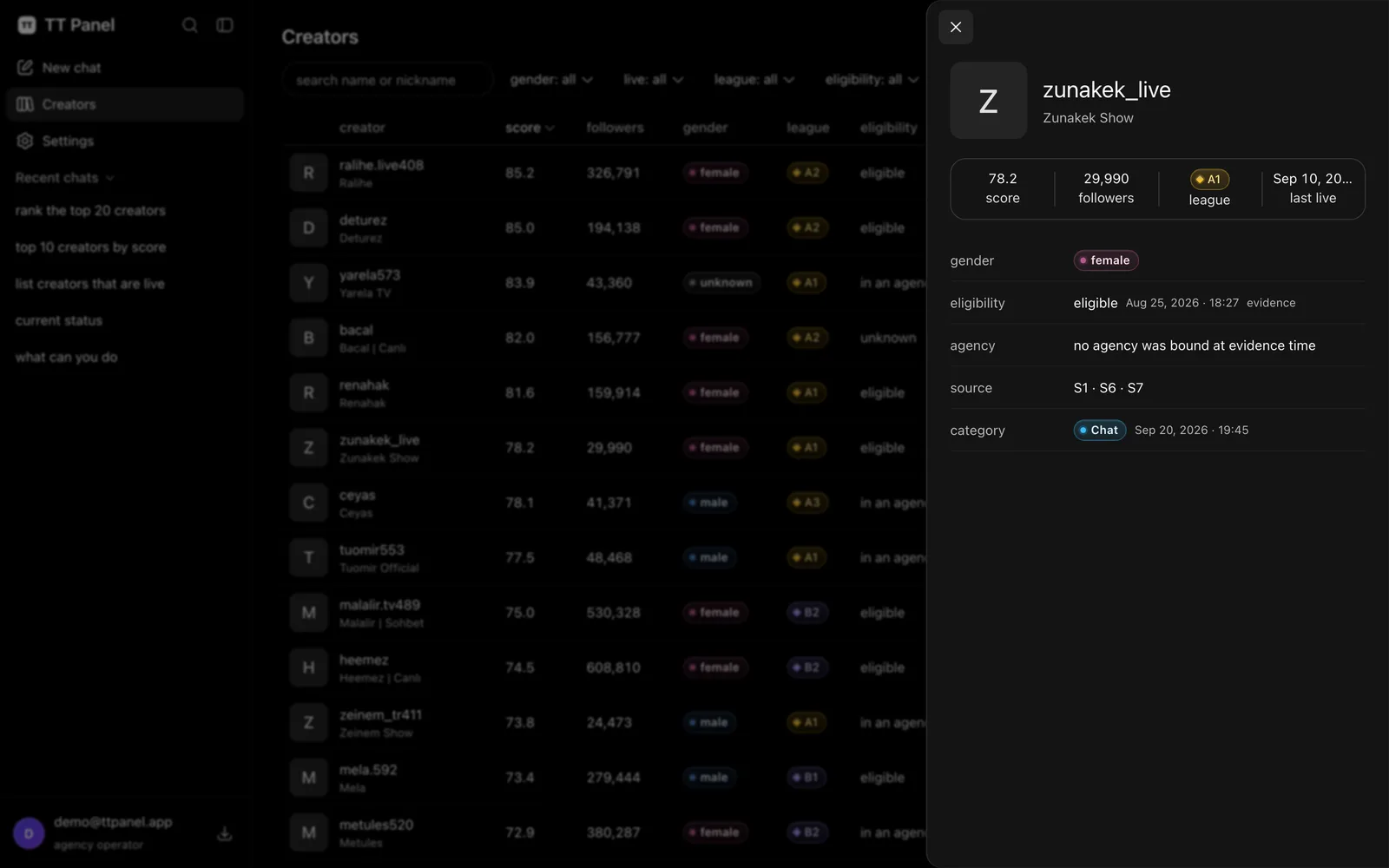
Every row in the list should open into a creator file. That file should hold everything known about the creator on one page: their identity, league, eligibility checks and the team's notes. A new hire reads this page before looking at a creator, and learns the history.
How notes are written matters too. A note that just says "talked to them" tells nobody anything a week later. A short but complete sentence is enough: when, who, what was discussed, what the next step is. A team that builds this habit in the first week saves real time in the months that follow.
A single list also has another benefit. A creator eliminated once stays eliminated for good. A creator who turned out to be tied to another agency, or who said they do not want to work with you, does not fall back into the list. That knowledge belongs to the agency, not to one employee's memory.
How should access close when an employee leaves?
This is the most neglected part on most teams. When an employee leaves, shared passwords do not change, the shared spreadsheet's link is still in their hands, and nobody knows where the conversations they had with creators are. Months later, a creator might tell you your former employee is still talking to them on the agency's behalf.
The first step of the fix is everyone working with their own login. Individual logins instead of a shared account make who did what visible and make it possible to close a departing person's access from one place. The second step is that team members see only their own work; there is no need for everyone to have access to settings and all of the agency's data.
The third step is a short checklist for the day someone leaves: close their access, hand off the creators they were handling to someone else, and note down open conversations. This list is written once and applied the same way every time someone leaves.
Employee data and access records can count as personal data. This guide is not legal advice; talk to a lawyer about your obligations under applicable data protection law.
How does the agency owner see what the team is doing?
Asking every employee what did you do today, every day, is both tiring for the agency owner and unreliable. The answer comes from memory and is incomplete. What the agency owner needs is to see what the team did today on one screen.
A screen like this is not a surveillance tool, it is a structure tool. It should show which creators were checked, which are waiting, and where things are stuck. When the agency owner spots a problem, they know which creator it concerns and who they need to talk to.
Visibility is good for the team too. When it is clear who did what, "I did this, they did not" arguments drop off. Employees stop repeating each other's work, and creators who fell through the cracks get noticed.
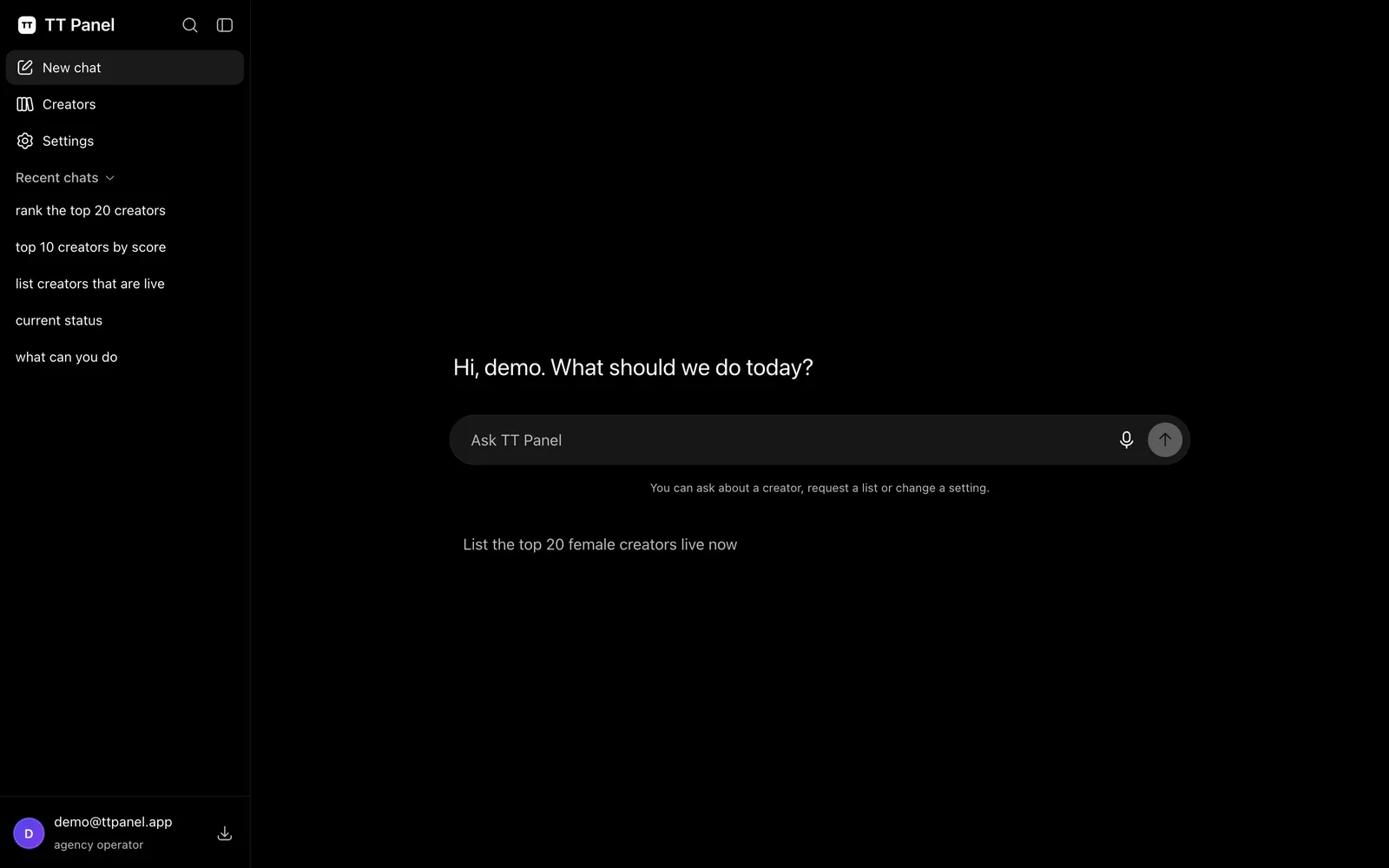
Being able to ask questions easily also helps. Asking the panel by typing or speaking, "list the creators in this league" or "where do I export the evidence record from", is faster than searching through a spreadsheet. The answer comes from the panel's own data.
How should a new employee join the team?
A new employee's first day is the best test of whether the team's structure actually works. If they can learn on day one what to read before looking at a creator, when not to write to someone, and who to ask when they have a question, the structure is working.
Give the new employee their own login on day one, not a shared password. Access that only lets them see their own work is enough. Go through the short working note together, and have someone next to them for their first few creators.
At the end of the first week, ask the new employee what they struggled with. What they got stuck on is usually a rule everyone else assumed was obvious but nobody had ever written down. Writing that rule down makes the next person's job easier.
How do you show who checked in a dispute?
When a creator or another agency says "you wrote to us", the structure inside the team also becomes a defense to the outside world. The first question is always whether the creator's status was checked before you reached out.
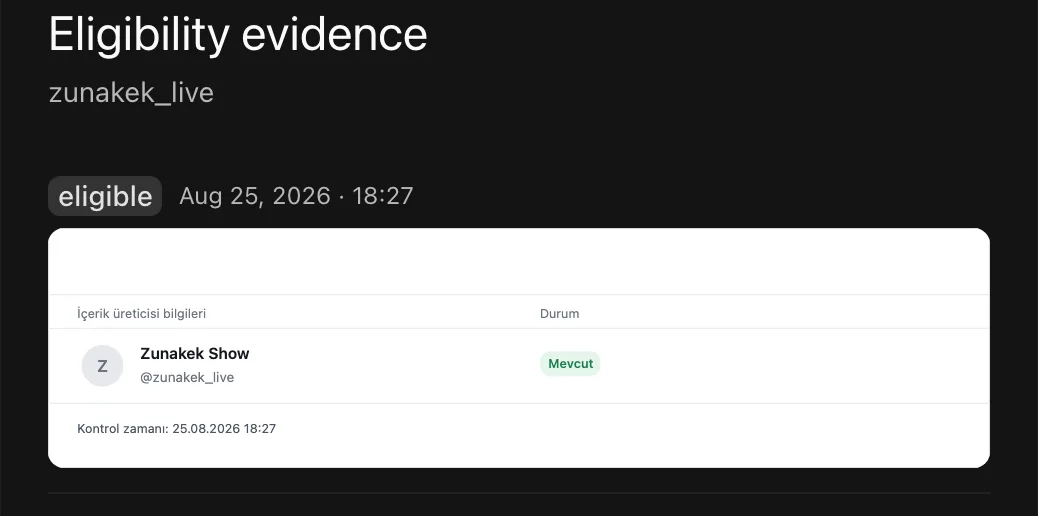
The answer to that question needs to come with a record. The record should show what day and time the check was made and what the result was, and it should not be possible to change afterward. A screenshot or an employee's word does not do the job. The record should belong to the agency, staying in place even after the employee who made it has left.
Who holds the record also matters. A note kept on one employee's own computer leaves with them when they go. Saying that employee is not with us anymore when a dispute comes up does not matter to the other party; they ask the agency the question, and the agency has to answer it.
TT Panel keeps this record for you. Every check is written to a timestamped record that cannot be changed or deleted afterward. If a dispute comes up, you can pull an evidence package for a single creator or a date range and hand it to the other party. Writing to a creator always stays your team's job.
Request a walkthrough to see how your team can work from a single list.
Request a walkthrough
Let us walk you through it in 30 minutes: the panel, the evidence record and how your team will work.